
CMU to Lead National Study of AI in Arts Education
NEA Research Lab Grant will support the development of benchmarks to guide policy and practice across higher education
Media Inquiries
As artificial intelligence reshapes how art is made and taught, colleges and universities are largely determining on their own how to prepare the next generation of artists and designers. Carnegie Mellon University’s College of Fine Arts(opens in new window) will lead a new national effort to understand those responses and give institutions the evidence they need to make informed decisions.
Supported by a highly selective National Endowment for the Arts (NEA) Research Lab Grant(opens in new window), the initiative will examine how higher education is integrating AI into arts education, identify emerging opportunities and challenges, and establish benchmarks that can inform policy and practice. Receiving this grant signals that Carnegie Mellon is helping shape a national research agenda in this area, said principal investigator and Professor of Architecture Daragh Byrne(opens in new window).

“The arts are uniquely positioned to respond to AI in ways that are essential to continued innovation. But as AI reshapes creative practice, the arts have to help lead the national conversation — not follow it," Byrne said. “This grant recognizes decades of work at the College of Fine Arts to do exactly that, and it gives CMU a new center of excellence that brings creative practice and critical thinking to the university's broader AI efforts.”
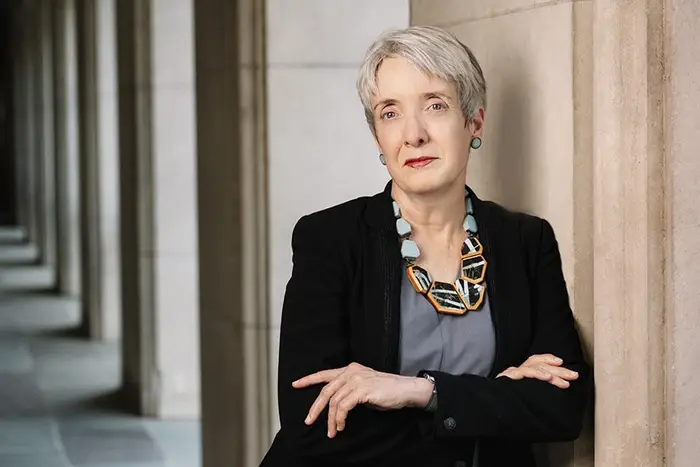
“I’m really proud but, honestly, not surprised that our team was awarded this highly selective grant,” said Mary Ellen Poole(opens in new window), dean of the College of Fine Arts. “The work that Daragh, Brett and their colleagues have done is more critical than ever as we wrestle with the impact of generative AI on our creative practices.”
Project partners include Creative Generation in South Portland, Maine; Alliance for the Arts in Research Universities (a2ru) in Ann Arbor, Michigan; and Pennsylvania State University's Art and Design Research Incubator in State College, Pennsylvania.
At Carnegie Mellon and, specifically, at the Heinz College of Information Systems and Public Policy(opens in new window), the NEA grant will benefit the Arts Management and Technology Laboratory(opens in new window) (AMT).

“The NEA grant allows CMU to lead a national effort in analyzing how higher education — and its recruitment pipelines — can better integrate AI literacy, specifically within the arts,” said Brett Ashley Crawford, teaching professor, Master of Arts Management and Entertainment Industry Management programs, and executive director of the AMT Lab. “It will aid the AMT Lab in its efforts to amplify arts advocacy, policy and education.”
Byrne agreed, noting that CFA's work in AI and the arts is increasingly outward-facing. This new initiative at CMU and CFA will coordinate resources and shared knowledge that allow educational institutions to advance their own AI efforts relative to arts and design.
“We will ask what it means for students to work creatively, skillfully and ethically with AI, and where the real opportunities for artists and designers are within this space,” he said. “Our benchmarking initiative will track how institutions across the country are responding to AI in the arts, giving us the data to shape smarter policy and practice on campuses nationwide. Right now, every school is figuring this out alone. The arts need a clear, coordinated voice in the national conversation about AI — and that's what we're building."
For more information about this effort at Carnegie Mellon, go to artsaiobservatory.org(opens in new window).


