
CMU Builds on Its Strengths To Advance NeuroAI
By bringing neuroscience and AI into conversation, researchers are using each field to advance the other — revealing insights into how the brain works while building AI systems that can learn, perceive and adapt more like biological intelligence.
Media Inquiries
For decades, neuroscience and artificial intelligence have pursued a similar question from different directions, examining how intelligence emerges from a system that can perceive the world, learn from experience and make decisions.
Now, advances in both fields are making it possible to tackle that question together.
At Carnegie Mellon University, neuroscientists are using state-of-the-art models from artificial intelligence and machine learning to better understand how the brain perceives sights and sounds, learns language and reasons about the world around it. Researchers in AI and related fields are drawing on biological intelligence to understand principles that could make machines more capable and adaptable. Such interdisciplinary work creates synergies that help drive the emerging field of NeuroAI.
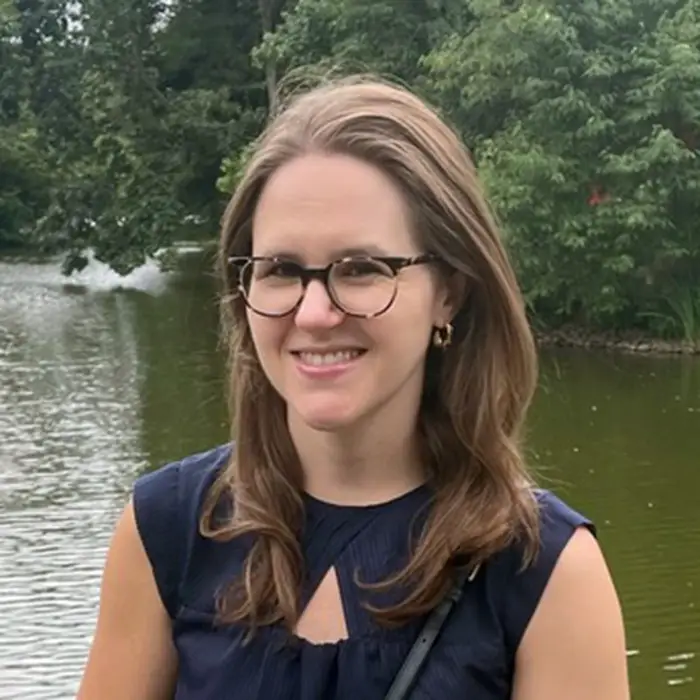
For Maggie Henderson(opens in new window), an assistant professor of psychology and a faculty member in Carnegie Mellon’s Neuroscience Institute(opens in new window), that means using new tools to help answer old questions.
Henderson studies how the human brain makes sense of the visual world by transforming complex perceptual input into meaningful representations of objects and scenes. Her team collects functional magnetic resonance imaging (fMRI) data and builds models that predict how different areas of the human visual cortex respond to images.
For years, that was a difficult challenge. Neuroscientists did not fully understand which visual features — properties such as color, texture and shape — were responsible for driving responses in visual brain regions during object and scene perception. This made it hard to create accurate models of brain activity.
But advances in AI, particularly in computer vision and machine learning, have given researchers a new way to investigate the brain. Deep neural networks can recognize objects, understand scenes and perform many of the same high-level visual tasks as humans. Researchers have found that the internal representations generated by these systems — patterns of activity within artificial neurons — can help to predict and understand how populations of neurons in the human brain respond to visual information.
And the exchange does not stop there. When researchers discover principles of perception, learning or decision-making in biological systems, those insights can become targets for building more capable AI.
That two-way exchange is what makes NeuroAI more than just the use of AI as a tool for neuroscience. It is an effort to understand intelligence — both biological and artificial — and, in the process, open new avenues for both.
Big questions, big collaborations
As the field gains momentum, it has become a national research priority, said David Badre(opens in new window), NI’s director.
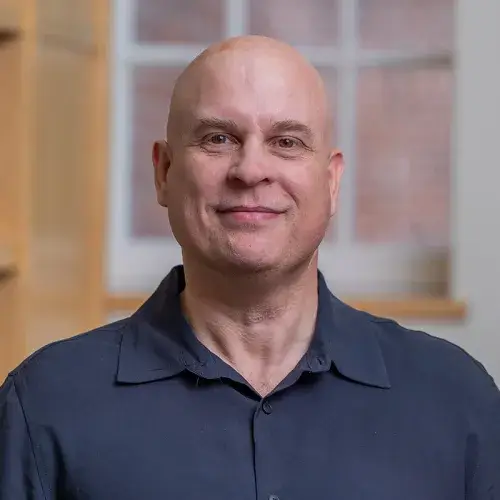
“The Neuroscience Institute's work in NeuroAI aligns closely with federal funding priorities in artificial intelligence and neurotechnology, that seek new theoretical frameworks to understand the human brain, while accelerating innovations in technology, medicine and brain health,” he said.
That includes some collaborative efforts seeking to understand how the brain transforms information into intelligent behavior.
One example is the Simons Collaboration on Ecological Neuroscience (SCENE)(opens in new window), a 10-year, $80 million initiative that brings together neuroscientists and machine learning researchers to develop mathematical theories of how brains transform perception into action in real-world environments. Carnegie Mellon professor Xaq Pitkow(opens in new window), a professor of the Neuroscience Institute, is part of the collaboration.
The researchers combine next-generation neural recording technologies, computational modeling and experiments to test theories about how the brain represents information, identifies opportunities for action and makes decisions under uncertainty. Pitkow develops mathematical frameworks that help connect those processes to computational principles.
Pitkow and other researchers also have played a key role in the Machine Intelligence from Cortical Networks (MICrONS) project(opens in new window), a major collaboration co-funded by IARPA and the NIH Brain Initiative(opens in new window). A key ingredient of MICrONS was measuring both anatomical connectivity and neural activity in the same brain, allowing researchers to relate the brain’s structure to its function. The project brought together researchers to map a cubic millimeter of mouse brain tissue containing about 200,000 cells and more than 500 million connections, creating one of the most detailed reconstructions of neural circuitry to date.
The scale of these efforts reflects a central promise of NeuroAI: New technologies can make it possible to measure the brain in unprecedented detail, while computational models can help researchers make sense of that data. At the same time, the principles revealed by those models could inform the design of artificial systems.
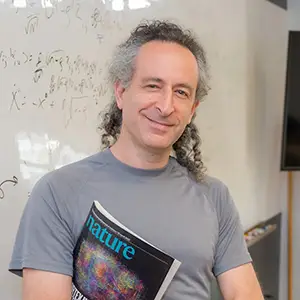
“By combining these incredibly comprehensive measurements of the brain's structure and function, understanding some fundamental mechanisms of thought may now be within reach,” Pitkow said.
Pitkow discussed that future as a featured speaker at the NIH's 2026 BRAIN Initiative Conference, Inventing the Future, held Aug. 11-13, 2026, in Rockville, Maryland. He participated in the NeuroAI Innovation Domain session, “The BRAIN NeuroAI Roadmap: Closing the Loop Between Natural and Artificial Intelligence” and was on the Plenary panel on the four pillars of the BRAIN Initiative.
Restoring hearing by modeling the brain
Jenelle Feather(opens in new window), assistant professor of psychology and the NI, studies how the brain processes sensory information and how computational models are used to understand perception.
Using neuroscience, cognitive science and AI, Feather develops and tests computational models that attempt to replicate biological systems, from human behavior to measured neural responses. Her work examines whether AI neural networks process information in ways that resemble biological brains and has applications ranging from designing biologically aligned hearing aids and advanced brain-machine interfaces to building artificial intelligence systems that see and hear the world the way humans do.

“It’s an incredibly exciting time to be working in neuroscience and cognitive science, as we now have models that go directly from a physical input like a sound or image and compute a predicted neural response,” Feather said. “These “stimulus computable” models of brain responses show immense potential to be utilized in translational research.”
That approach could help researchers understand not just how the healthy brain processes sound, but how to design technologies that restore those processes when hearing is impaired.
“Imagine having a high-fidelity model of the healthy human auditory system. In this model, one could simulate different types of hearing impairment and measure how the brain responses would change due to this type of hearing loss. Going further, this impaired model could be used to design more personalized algorithms for hearing aids or cochlear implants that would help restore the neural code to be closer to what it is in the healthy space,” Feather said.
Reverse engineering intelligence
Aran Nayebi(opens in new window), assistant professor in the Machine Learning Department and a faculty member in the Neuroscience Institute, studies intelligence by first observing how animals learn. Unlike AI systems, which often rely on carefully designed objectives or vast amounts of labeled data, animals continuously explore, adjust their behavior and decide what to do without constant instruction.
"The brain tells us what behaviors AI has yet to reach to survive in the real world," Nayebi said. "It supplies us with concrete engineering targets as to what intelligence is."
By studying those behaviors, Nayebi's lab, the NeuroAgents Lab(opens in new window), develops AI systems that can learn and adapt when circumstances change, while also exploring how increasingly autonomous AI can remain safely under human control.
Nayebi believes bringing these disciplines together could ultimately lead to more adaptable robots, smarter assistive technologies and new ways to understand and treat neurological disorders.
The promise of NeuroAI
This work reflects a longstanding, broader effort at Carnegie Mellon to bring researchers studying natural and artificial intelligence into conversation. Michael J. Tarr,(opens in new window) the Kavčić-Moura University Professor of Cognitive and Brain Science, moved to Carnegie Mellon in 2009 because he saw the university’s scientific community as the premier venue for combining the brain and cognitive sciences with the computational sciences.
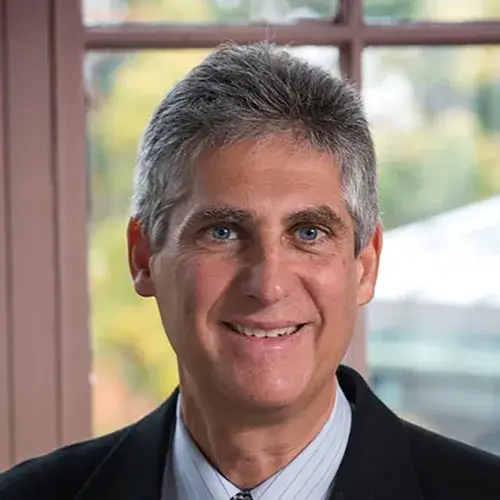
“Through the Psychology Department, the Neuroscience Institute and the School of Computer Science, Carnegie Mellon has established itself over many decades as a world leader in the study of intelligence in all its forms,” Tarr said. “When the AI revolution began to reshape how we think about intelligence, Carnegie Mellon was uniquely positioned to unite its deep expertise in the science of the mind with advances in artificial intelligence. Our world-class NeuroAI group reflects not only Carnegie Mellon’s historical leadership, but also our flexibility to work across disciplines and our ability to leverage our core strengths to rapidly advance new fields.”
Reflecting this ambitious agenda, the goal of CMU’s NeuroAI research is not simply to make AI more brain-like or to use AI to study neuroscience, Badre said. It is to use the two fields to make discoveries that neither could make alone — and then turn those discoveries into tools that benefit people.
“The potential impact of NeuroAI reaches from the clinic to the computer. Advances in brain modeling could lead to smarter hearing aids, improved brain-machine interfaces and vision restoration technologies, while brain-inspired approaches to AI could produce systems that learn, adapt and interact with the world more like humans do,” Badre said. “This is precisely the brand of interdisciplinary science and innovation that thrives at CMU and the Neuroscience Institute.”
Building the next generation of NeuroAI
Carnegie Mellon has a long history of connecting human and machine intelligence. In the 1960s, psychology professor Herbert A. Simon helped lay the foundations of artificial intelligence. Today, CMU researchers continue that tradition by studying intelligence in both directions — using neuroscience to build better AI and AI models to deepen our understanding of the brain.
That work spans research laboratories, large-scale collaborations and academic programs. Through programs such as the Master of Science in Neural Technology (MiNT)(opens in new window) and the Joint Ph.D. Program in Neural Computation and Machine Learning(opens in new window), CMU is training researchers who can bridge neuroscience, cognitive science and AI.
“You need domain knowledge in both areas in order to work in neuroengineering. We’re training students to be cross disciplinary with a foundation in both areas.”
— Jana Kainerstorfer(opens in new window), professor of biomedical engineering and MiNT co-director
“Advances in AI and brain-inspired models, combined with new hardware that can collect huge amounts of brain data, plus the rise of non-invasive brain imaging and affordable EEG headsets, make this an ideal time to launch a program like MiNT. There’s a lot of excitement and still open questions about what all of these systems are capable of doing.”
— Abigail Noyce(opens in new window), assistant research professor in neuroscience and MiNT co-director


