
Forging the Future:
The Intersection of Health, AI & Tech Pittsburgh, USA
Forging the Future: CMU, Pitt Co-Host Summit on Health, AI and Technology
Media Inquiries
Carnegie Mellon University’s leadership in artificial intelligence, robotics and health care took center stage during a global innovation summit held this week at the University of Pittsburgh.
Organized in partnership with the Council on Competitiveness and the Global Federation of Competitiveness Councils (GFCC), Forging the Future: The Intersection of Health, AI and Tech(opens in new window) convened thought leaders from academia, industry and government to explore how artificial intelligence and emerging technologies are reshaping the future of health care.
The Health, AI and Productivity Imperative: From University Research to Community Impact

The event spotlighted Pittsburgh as a hub for innovation fueled by the city’s world-class research institutions.
“The renaissance of Pittsburgh over the last two decades was powered by the extraordinary alignment of public and private sectors with our academic institutions and civic organizations,” Carnegie Mellon University President Farnam Jahanian said. “Today, we are a city of eds, meds and emerging tech. We are part of an ecosystem that is fueling economic development through place-based innovation, whose impact is amplified by research and talent from our academic institutions.”

In the first panel of the day, titled “The Health, AI and Productivity Imperative: From University Research to Community Impact,” Jahanian discussed how university-led research can drive productivity and improve health outcomes. After noting that CMU launched the first undergraduate degree in AI in 2018, and that AI is being integrated into the curriculum across the university, Jahanian underscored the university’s commitment to ethical AI and community-centered innovation.
“We're finally at the cusp of understanding learning science and bringing AI to bear such that I think within the next 10 years we will see a fundamental shift in how we teach, how we learn, and most importantly, improve learning outcomes for students of all ages from K-12,” Jahanian said.
Transforming Realities: Pittsburgh, Birmingham and Belfast Shape a Sustainable and Prosperous Future

Later in the morning, CMU’s Vice President for Research Theresa Mayer joined international leaders from the United Kingdom and Northern Ireland to explore how cities like Pittsburgh are shaping a sustainable and prosperous future through tech-driven collaboration.
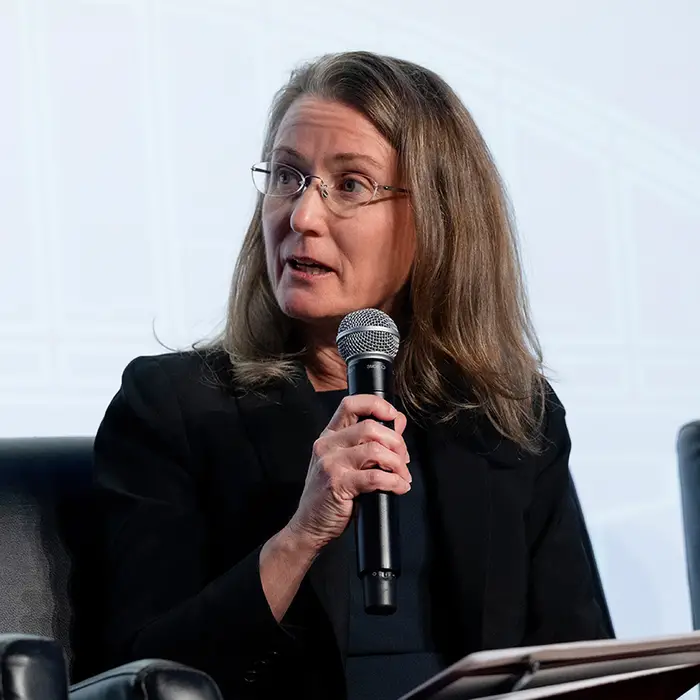
“(Pittsburgh has) a deep tradition in manufacturing, and very importantly, once again, we have incredible natural resources in this region: the energy and the water, which are going to be critical if we’re thinking about growing the base of manufacturing in the U.S.,” she said.
Mayer mentioned that Sen. Dave McCormick, R-Pa., hosted a major energy and AI summit at CMU in July, which brought together over 40 CEOs, five cabinet secretaries and the president of the United States to consider the role Pennsylvania and Southwestern Pennsylvania can play to meet the urgency of the moment, announcing over $90 billion in investment.
“The future is bright, building on (Pittsburgh’s) past. Now, we really need to move forward to execute on that future,” she said.
AI-Powered Education for the Next Generation of Innovators and Leaders
During the lunch panel, Marsha Lovett, vice provost for teaching and learning innovation, represented CMU in a discussion on preparing the next generation of innovators. She highlighted CMU’s pioneering work in AI-enhanced learning environments and the importance of interdisciplinary education.

“For education to integrate AI into its efforts, it needs to be more nimble and agile and data-informed in keeping up with change. Integrating AI into education means keeping track of how the curricula are effectively or not effectively preparing students with what they need, and adjusting that in a continuous monitoring cycle. In addition, I think we need to think about education as a lifelong endeavor. And so infrastructure to support lifelong learning is another aspect of integrating AI into education,” Lovett said.
CMU Researchers Present at the Innovation Exhibit
Carnegie Mellon researchers shared their transformative work during an Innovation Exhibit with attendees at Forging the Future: The Intersection of Health, AI and Tech, organized in partnership with the Council on Competitiveness and the Global Federation of Competitiveness Councils (GFCC).
[image or embed]— Carnegie Mellon University (@cmu.edu) October 22, 2025 at 1:02 PM


Leadership Recognized for Excellence

CMU President Farnam Jahanian was honored by the GFCC for his transformational leadership in higher education, research and innovation. Jahanian (third from left) is seen here with GFCC Vice-Chair | Australia, Charles Kiefel AM, GFCC Chair | USA, Chad Holiday; and Deborah Wince-Smith, President, GFCC | USA.
At the Leading Edge of Health, AI and Technology

On Tuesday the GFCC 2025 Global Innovation Summit began with a panel discussion about how Pittsburgh is uniquely positioned to be a leader in the integration of artificial intelligence in patient care and featured Carnegie Mellon University’s Pradeep Ravikumar and Carl Kingsford.

“When you talk about AI making an impact of discovering a new drug, you need to talk with the physicians who have spent decades learning the ins and outs of that particular disease,” said Kingsford(opens in new window), Herbert A. Simon professor of computer science and director of the Center for Machine Learning and Health(opens in new window). “At CMU, our Ph.D program in computational biology sits at the intersection. It’s an early engine that could be developed to advance new therapies, new treatment selection and new drugs.”

Ravikumar said he hopes future strides in generative AI research will allow health care providers to immediately and directly improve AI tools that are incorporated in medical settings.
“Gen AI has done really amazing things — listening to patient-doctor interactions and transcribing them so providers don’t have to, for example,” said Ravikumar(opens in new window), professor of machine learning(opens in new window) in the School of Computer Science(opens in new window). “There’s a lot of innovations happening, but it’s worth studying how doctors can incorporate their context directly so they can steer the AI models to their needs.”
From Diagnostics to Treatments: Leveraging Tech Opportunities to Advance Healthcare


Later in the morning, a panel of academics and health care practitioners discussed how machine learning and AI can help guide complex care for patients, particularly when treating the brain.
“We want to figure out how the body influences the brain and its cognitive function so we can understand how to optimize treatments,” said Jana Kainerstorfer(opens in new window), CMU professor of biomedical engineering(opens in new window) and associate department head for faculty and graduate affairs.
Kainerstorfer explained how she’s studying dolphins — animals that can hold their breath for 30 minutes — to understand how their brains can continue to function without a continuous supply of oxygen. She hopes that it will lead to new discoveries that can support human brain functions in traumatic care settings.
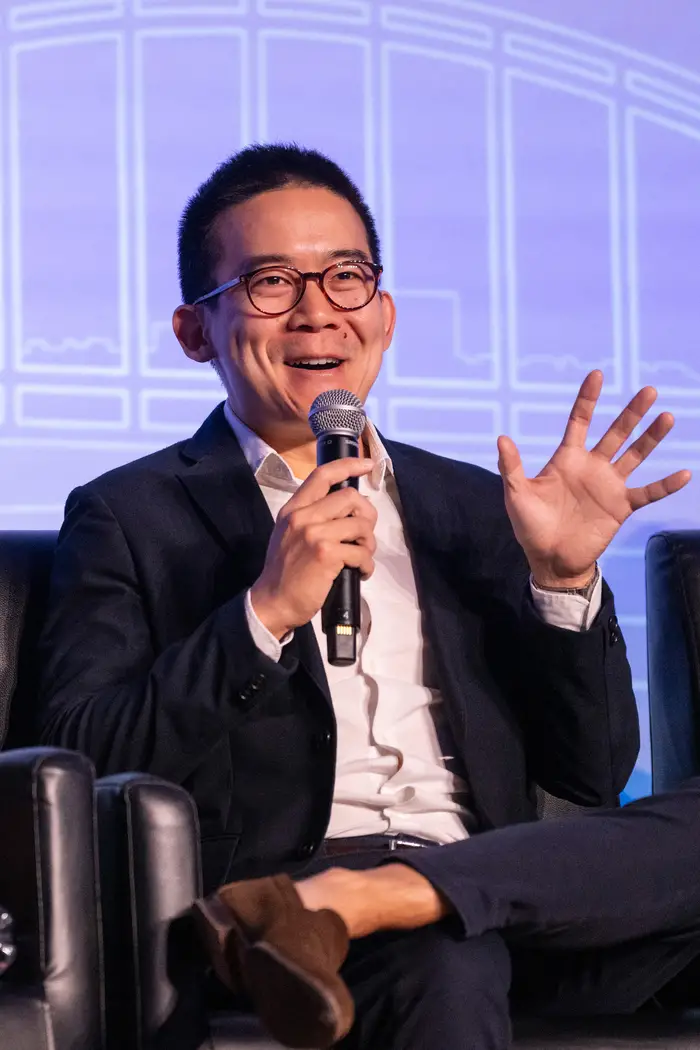
“There are so many ways we can modulate our body that have an effect on function. We are asking, how can we leverage the interactions between body and brain to create better human cognitive performance?” Kainerstorfer said. “At the core of this we need better devices, such as how to make better ventilators to support human brains.”
However, CMU’s Andrew Li(opens in new window) said that in order to achieve medical breakthroughs, there needs to be better communication between practitioners and language models.
“I think what’s missing right now is connecting the medical problems to the AI methods,” said Li, Frank A. and Helen E. Risch Assistant Professor of Operations Research(opens in new window) at the Tepper School of Business(opens in new window).
Health, AI and Tech: Investing in a Future
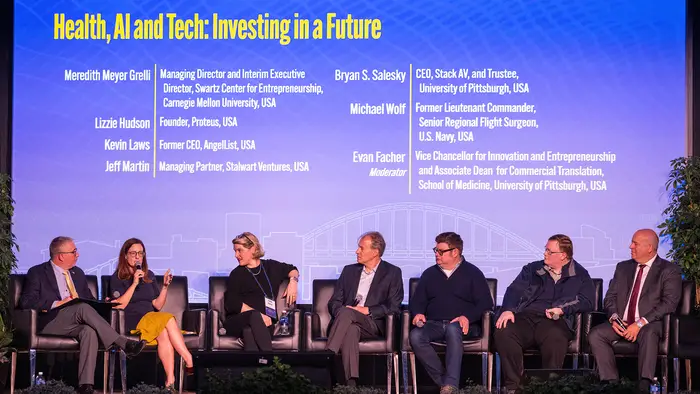
AI’s rapid growth and development poses unique challenges and opportunities for investors. In a late morning session, business leaders and experts weighed in on the ever-evolving health technology landscape from a financial perspective.
“The speed of innovation is hastening so quickly, we are building the future economy with the companies we build today,” said Meredith Meyer Grelli(opens in new window), managing director and interim executive director at CMU’s Swartz Center for Entrepreneurship(opens in new window).

“Pittsburgh has this unique opportunity to blend our world-leading research in machine learning, AI and health care,” she said. “We as a region have to decide: Do we want to build the future economy? If the answer is yes, that needs to be our single minded goal. No matter what we’re investing in in Pittsburgh that has to be the guiding light and if we don’t do that, it’s never going to happen.”
Grelli also had advice for founders in the early stages of company development.
“Really think about the investor you’re working with and their philosophy,” she said. “Understand your strengths and how you can grow before you commit to any particular investor.”
Pennsylvania Leads the Nation in AI Advances

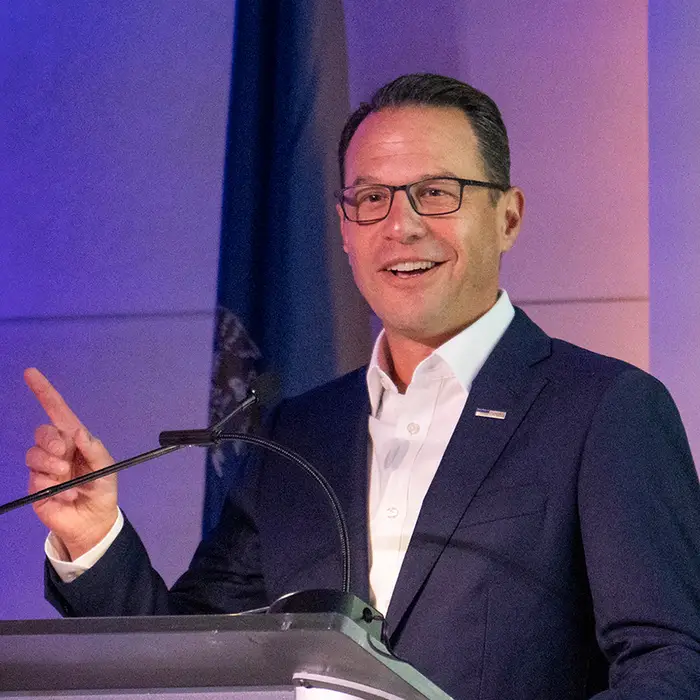
CMU President Farnam Jahanian introduced Pennsylvania Gov. Josh Shapiro, the keynote speaker of the conference.
“This event underscores the incredible value of place-based economic development and the transformative role of innovation ecosystems,” Jahanian said. “Governor, thank you for your inspiring leadership of our state and your steadfast commitment to making Pennsylvania a beacon for all.”
Shapiro said in his address that Pennsylvania is uniquely positioned to take advantage of economic opportunities created by AI, and praised the collaborative work of CMU and the University of Pittsburgh to further the technology.
“In government, in business, in academia, in health care, we cannot afford to fall behind and let others capitalize on artificial intelligence,” Shapiro said. “I want you to know that here in the commonwealth of Pennsylvania, we are all in. And I believe we are leading the way on this. We have a unique set of strengths to succeed. Our country must succeed at this. We should be leading on this and we can lead from right here in Pennsylvania.”
Advanced Manufacturing in a Dynamic Economy
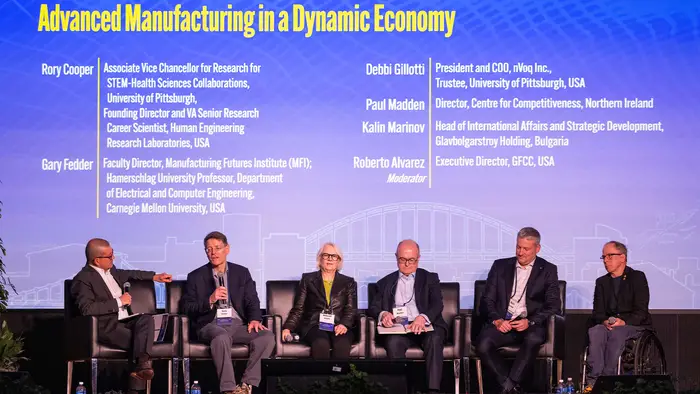
In the afternoon, a group of experts discussed how AI is impacting the manufacturing sector, from workforce processes to automation.
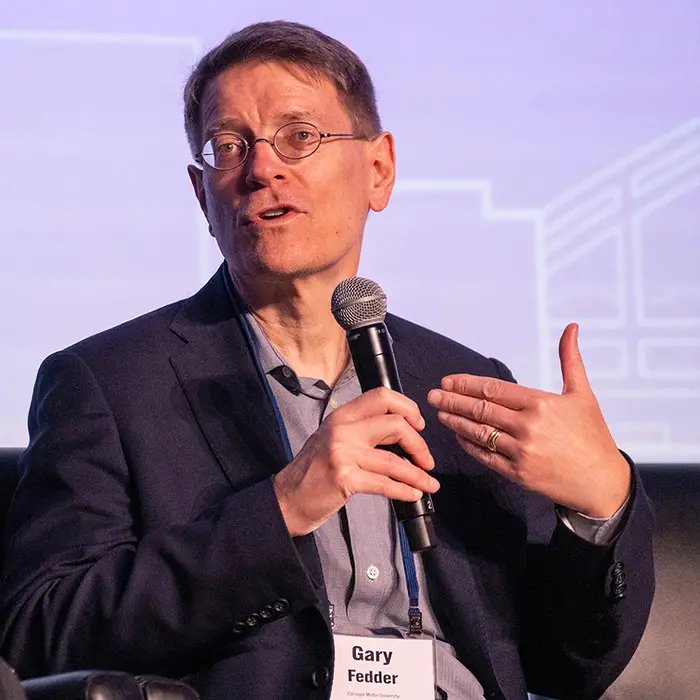
“Robotics is a huge part of advanced manufacturing, which then ties to automation and how technology interacts with the workers,” said Gary Fedder(opens in new window), Hamerschlag University Professor of Electrical and Computer Engineering(opens in new window) in CMU’s College of Engineering(opens in new window) and faculty director of the Manufacturing Futures Institute(opens in new window).
However, Fedder said that there’s a lot of advances that need to happen for AI to have a real-world impact in manufacturing.
“AI is great as a tool to understand things to speed up our lives, but it is still disconnected from the physical world,” Fedder said. “Manufacturing is all about physical things. So anyone who thinks AI will impact physical manufacturing facilities is going to be a little disappointed. But you’re not going to find ChatGPT operating your dishwasher in six months.”


